The Resource Library
This library is a collection of deeper guides, free resources, and practical tools to help you understand why you get stuck, and what actually helps you move forward. Rooted in curiosity, it offers a space for self-discovery that feels both supportive and sustainable.
With so much advice available, it’s easy to feel unsure where to begin. The resources here are designed to help you recognize your patterns, understand what’s getting in your way, and explore practical ways to start moving forward.
Structured Programs & Guides
For individuals looking for more focused, action-oriented experiences designed to help you put ideas into practice. Each program is intentionally curated with specific pathways, exercises, and frameworks to support real-world experimentation and the development of strategies that reflect your personal patterns.
The Progress Toolkit
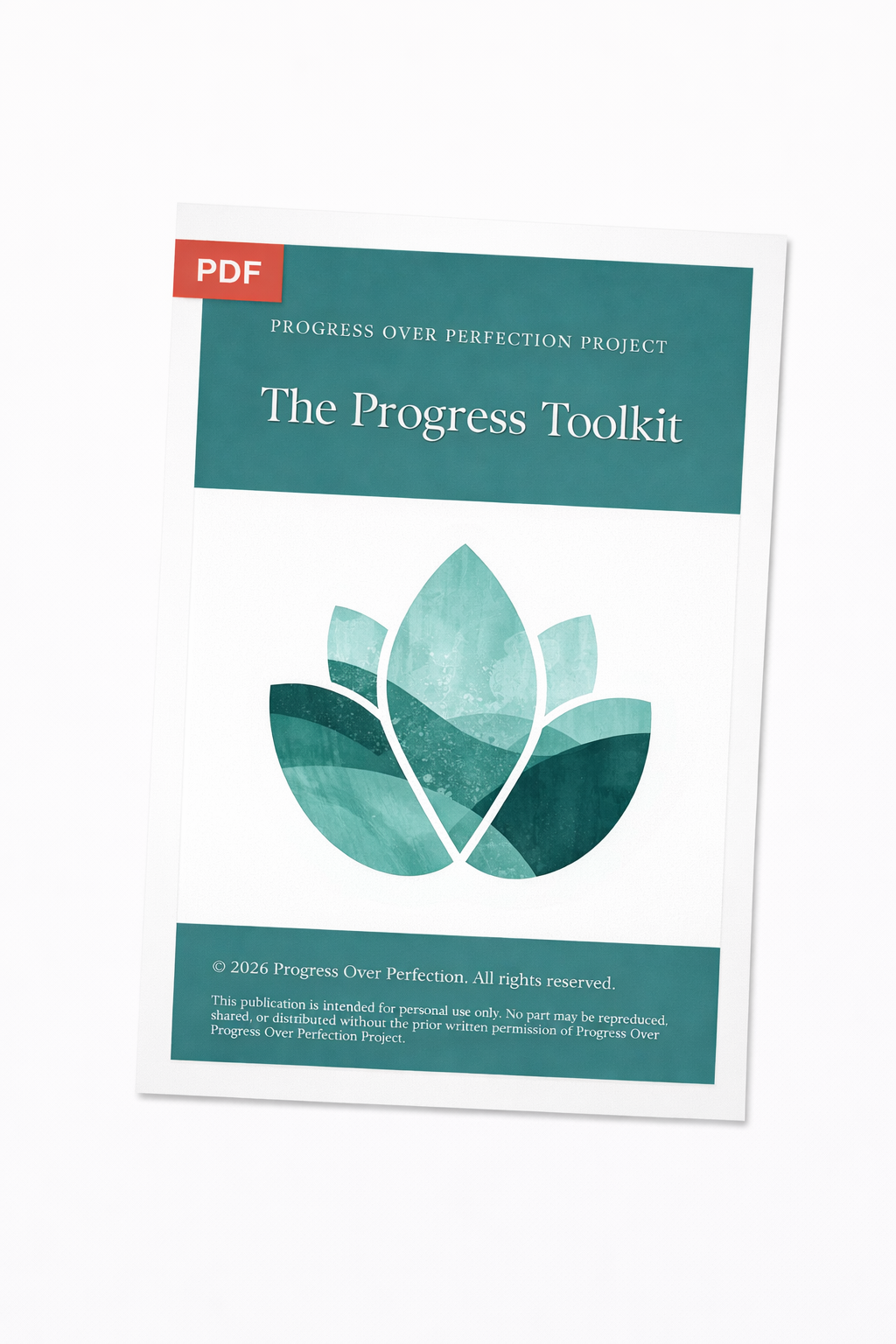
A compassionate, practical guide to understanding how procrastination shows up for you and how to work with it.
Procrastination is a familiar experience for many of us, yet it’s often misunderstood. It’s usually framed as a problem of discipline, motivation, or willpower, when in reality, it’s far more nuanced.
This guide offers a way to make sense of procrastination by helping you understand how it shows up for you, what’s happening beneath the surface, and where your momentum tends to break down.
Inside, you’ll explore:
· Four procrastination styles and how they show up in your real life
· The most common roadblocks that interrupt your momentum
· Four in-depth roadblock breakdowns
· Twelve practical, targeted momentum strategies
· Reflection prompts that build insight without self-criticism
Whether you’re feeling stuck, overwhelmed, scattered, or simply curious about your habits, this guide is designed to help you replace frustration with clarity and self-judgment with understanding.
The Momentum Lab
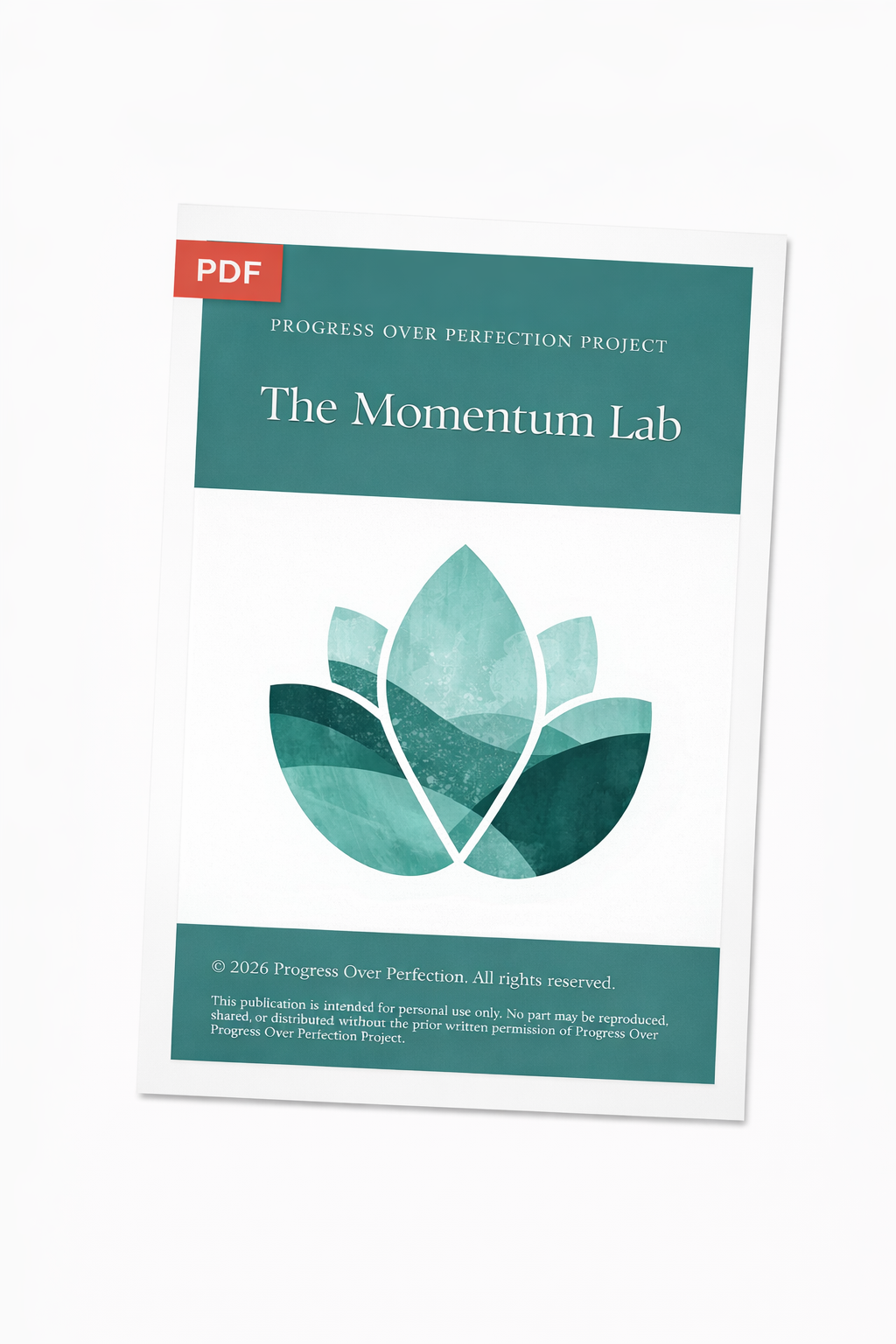
A practical, supportive system to help you move forward on the things that matter, one step at a time.
Procrastination isn’t something you solve once. It’s something you learn to work with. What helps in one moment may not help in another, and momentum often builds through trying, noticing, and adjusting over time.
This lab offers a way to move from understanding into action by helping you take one real task, see what’s getting in the way, and experiment with approaches that are actually suited to the kind of resistance you’re experiencing.
Inside, you’ll explore:
· A simple framework for choosing one task to focus on
· A guided way to identify and decode what’s getting in the way
· Six categories of momentum strategies matched to different types of friction
· Eighteen practical strategies you can test on real tasks
· Two reflection tools to help you notice what works and build on it over time
· A repeatable process of trying, noticing, and adjusting your approach.
Instead of staying stuck in your head or relying on willpower, you’ll begin to work with yourself more intentionally, learning how to start when something feels hard, stay with it a little longer, and follow through in a way that feels realistic.
Find Your Starting Point
Start with the Progress Toolkit
if you:
- care about it, and it still feels hard to begin
- you’re stuck in patterns of overthinking, avoidance, or self-criticism
- feel like some things feel easy, while others feel surprisingly hard
- want to understand what’s actually going on beneath the surface
Start with the Momentum Lab
if you:
- there’s something specific you’ve been meaning to do, but haven’t started
- are not sure where to begin or how to keep going once you do
- think about tasks more than act on them
- want a way to move forward without forcing it
Use the Toolkit & Lab together
if you:
- want to understand your patterns and have a way to work with them
- are ready to move from insight into something more tangible
- want to stop guessing what might help and start noticing what actually does
- want clarity and momentum
Further Exploration
This space offers a wide-ranging collection of materials you can move through freely, with plenty of context, explanation, and perspective. It’s designed for exploration, learning, and understanding, giving you language, insight, and a broad view of how procrastination shows up, so you can navigate these ideas at your own pace and make sense of what resonates.
- What Is Procrastination by Verywell Mind
- Procrastination Self Help Resources by the Centre for Clinical Interventions
- Understanding and Overcoming Procrastination by the McGraw Center for Teaching and Learning at Princeton University
- A Scientific Guide on How to Stop Procrastinating by James Clear
- The Psychology of Procrastination by Positive Psychology
Atomic Habits by James Clear
A practical exploration of how small behavioural changes shape long-term outcomes. This book focuses on the role of systems, environment, and identity in making habits more sustainable, offering a clear framework for understanding how tiny shifts can meaningfully influence consistency and follow-through.
The End of Procrastination by Petr Ludwig
Looks at procrastination through the lens of meaning, values, and internal motivation rather than discipline or productivity hacks. Particularly helpful for those who feel their avoidance is connected to deeper questions of direction, purpose, or emotional resistance.
Four Thousand Weeks by Oliver Burkeman
A reflective perspective on time, productivity, and the unrealistic expectations we place on ourselves. Rather than offering optimisation strategies, this book invites a gentler understanding of limitation, helping reframe urgency, burnout, and the pressure to constantly do more.
Hidden Brain – hosted by Shankar Vedantam
A research-driven exploration of how unconscious patterns shape our decisions, habits, and emotional responses. Particularly relevant for understanding why we avoid certain tasks and repeat behaviours that don’t align with our intentions.
No Stupid Questions – hosted by Angela Duckworth & Stephen Dubner
Curious, accessible conversations that unpack everyday human behaviour, decision-making, and flawed logic. While broad in scope, many episodes touch on the mental patterns that influence avoidance and motivation.
Ten Percent Happier – hosted by Dan Harris
Explores mindfulness and emotional regulation through practical, science-informed conversations. Helpful for developing greater awareness of stress responses, attention, and the internal conditions that affect follow-through.
The Happiness Lab – hosted by Dr. Laurie Santos
Draws on behavioural science to challenge common assumptions about success, productivity, and wellbeing. Often reframes the emotional drivers behind burnout, overwork, and motivational blocks.
The Lazy Genius Podcast – hosted by Kendra Adachi
Offers a gentle, realistic approach to productivity that prioritises intention over intensity. Focuses on doing what matters most without pressure, perfectionism, or chronic overwhelm.
UnF*ck Your Brain – hosted by Kara Loewentheil
Explores how social conditioning and internalized beliefs shape self-criticism, perfectionism, and avoidance — particularly for women. Emphasizes understanding thought patterns rather than forcing behavioural change.
 Progress Over Perfection Project