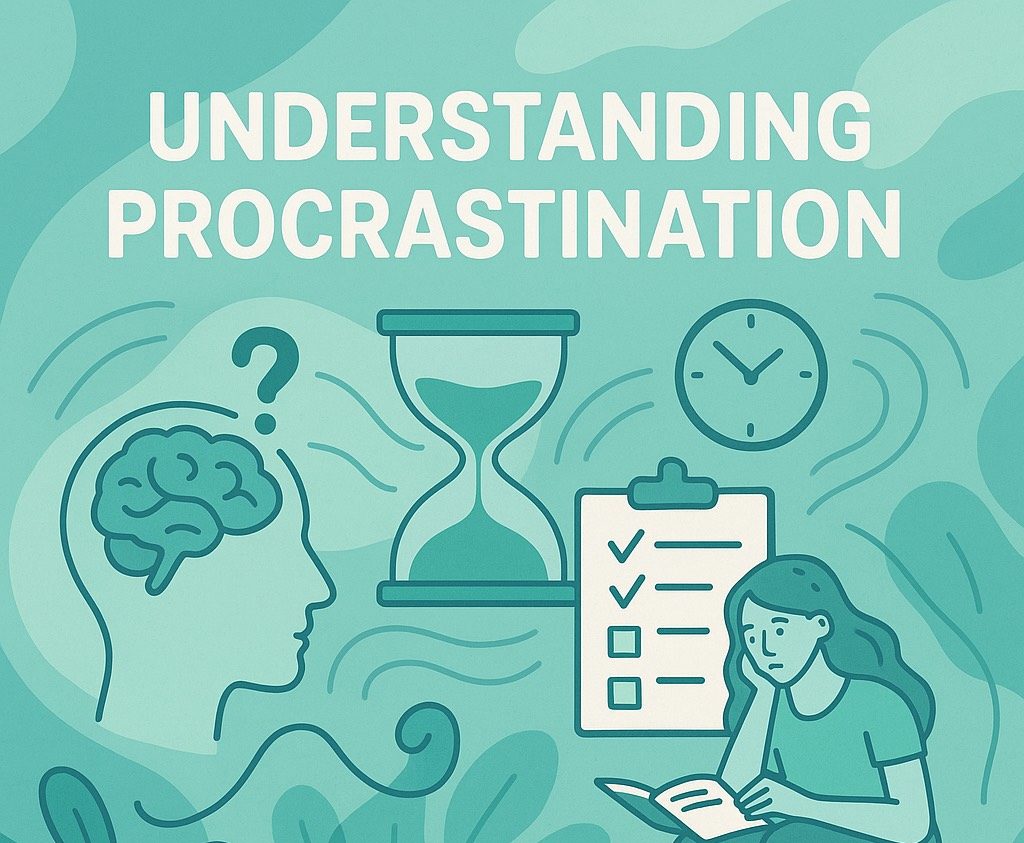
Procrastination is the act of putting things off, such as delaying tasks or decisions even when we know it might cause stress later. Most people experience it at some point, and it can show up in many ways: avoiding a project, putting off a conversation, or struggling to start something important.
While it’s easy to think procrastination is just poor time management, it’s often much deeper than that. In many cases, procrastination isn’t about being lazy or unmotivated, it’s about our emotions. It can be a sign that we’re feeling overwhelmed, anxious, uncertain, or disconnected from what we’re doing.
At the Process Over Perfection Project, we look at procrastination through a compassionate and practical lens, breaking it down into four key areas that can help uncover why things feel hard and where to begin making change:
1. Emotional & Mental Blocks
These include fear of failure, perfectionism, self-doubt, or emotional overwhelm. When emotions feel too heavy, it’s natural to avoid tasks that might trigger those feelings.
2. Executive Function & Brain-Based Barriers
Sometimes the challenge lies in how our brains process information, plan, or regulate focus and motivation. This can include difficulties with attention, task initiation, or managing transitions — areas where neurodivergence (like ADHD or anxiety) often plays a role.
3. Environmental & Practical Factors
Our surroundings matter. A cluttered space, lack of clear structure, or too many distractions can all make it harder to start and sustain effort. Simple adjustments to environment or routines can make a big difference.
4. Values, Purpose, & Misalignment
When our actions don’t feel connected to what truly matters to us, motivation naturally fades. Exploring personal values, goals, and sense of purpose can help bring clarity and reignite intrinsic motivation.
The Process Over Perfection Project is about replacing shame with understanding and progress with self-compassion. By identifying which areas feel most challenging, we can start building small but impactful strategies that help us move forward with awareness and intention.
 Progress Over Perfection Project
Leave a comment